www.richrosechapel.com


menu
Menu
History of the chapel
From one man's dream, to a luxury holiday retreat......

The chapel history

The renovation project

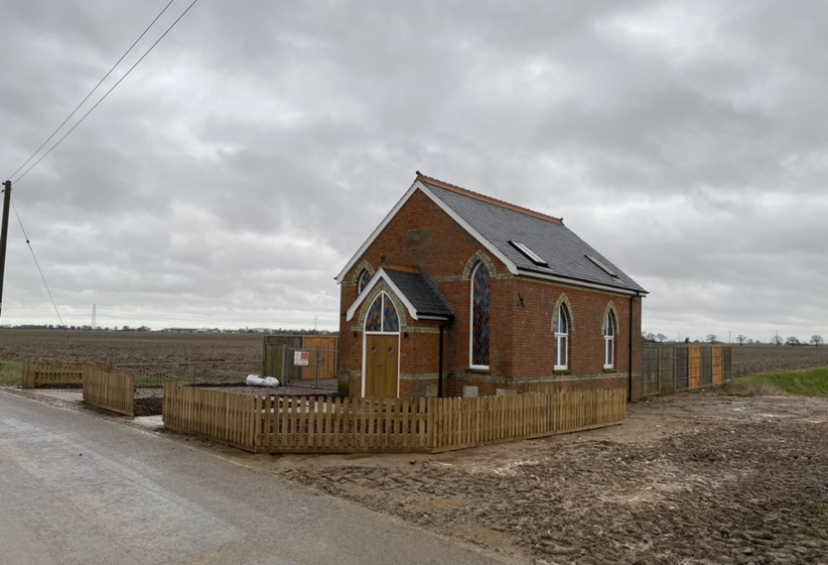
The new chapel
Chapel history

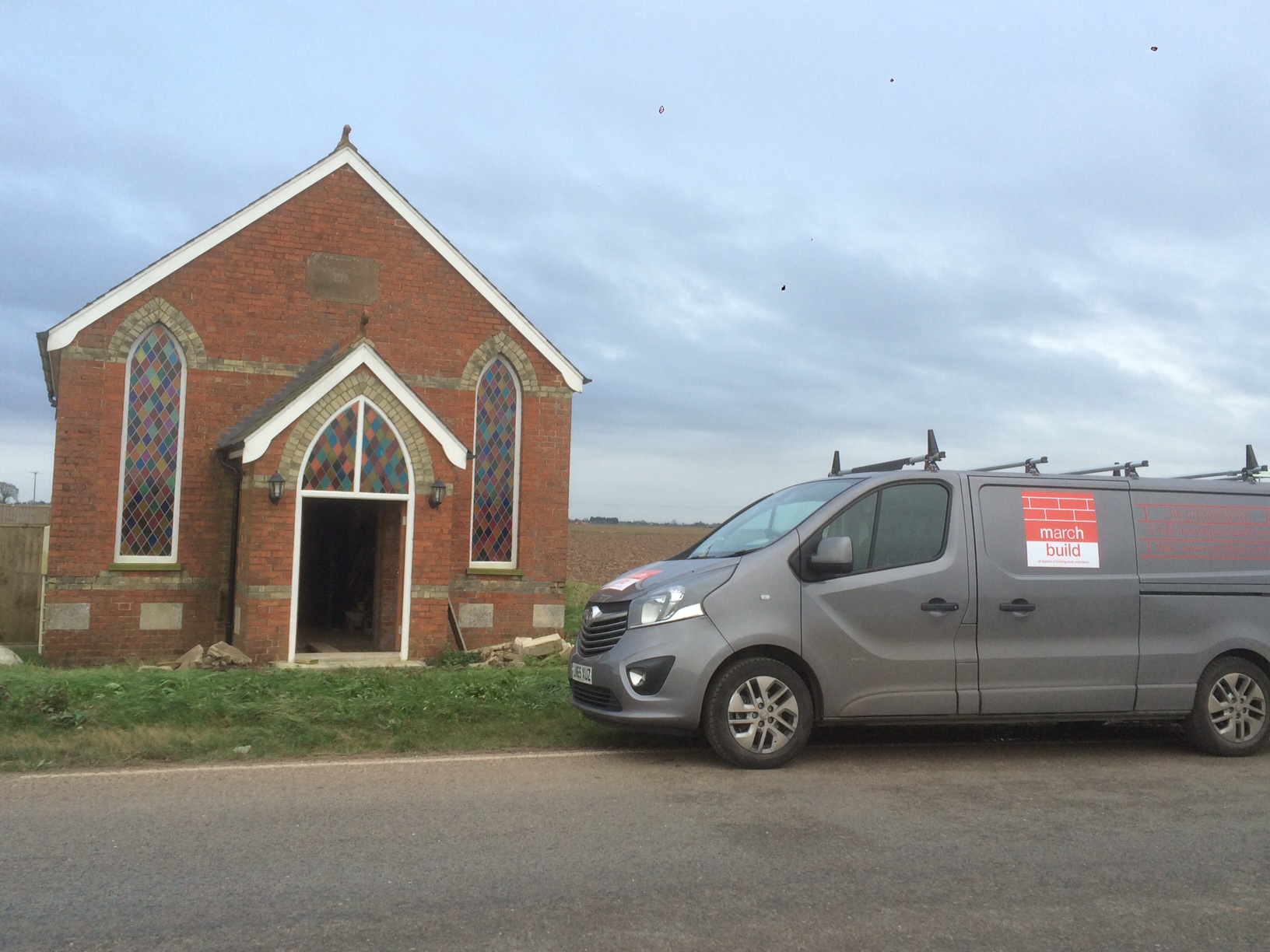
The former Wesleyan chapel, which is indicated on the 1931 OS County Series map, was built in 1910. It may have replaced a chapel of 1844 recorded for Moulton Marsh in documentary sources. The building on that site is not marked as a chapel on the OS 1:0000 map. The building indicated behind the chapel on the 1931 map is no longer extant. The chapel building is now (2010) disused and derelict. It is built of red brick with gault brick dressings and has a gabled roof with a slate covering. The gabled front elevation has three bays of pointed openings with a central gabled porch and a date stone above 'Wesleyan Church 1910'. The side elevations are of two bays of pointed windows, though the window details are lost. Some remnants of etched green glass survive. The roof has terracotta ridge copings and finials.
The window arches, and two stringcourses, are of double rows of beige gault brick. An upper floor, fireplace and chimney were added at some time. There are several foundation stones and a blocked segmental-headed doorway on the rear gable elevation.
The building is present on the 1888 County Series map and described as a Primitive Methodist Chapel, it is also on the 1905 County Series Map as a Wesleyan Methodist Chapel. In White's Directory of 1856 he speaks of two Primitive Methodist Chapels in the parish of Moulton. One is at Moulton Seas End (PRN 25328) dated 1835 and this might well be the other. If this is the case then it may be that the date of 1910 on the building may indicate when the Wesleyan Methodists altered the building rather than its construction date which might be in 1844.
The building is present on the 1888 County Series map and described as a Primitive Methodist Chapel, it is also on the 1905 County Series Map as a Wesleyan Methodist Chapel. In White's Directory of 1856 he speaks of two Primitive Methodist Chapels in the parish of Moulton. One is at Moulton Seas End (PRN 25328) dated 1835 and this might well be the other. If this is the case then it may be that the date of 1910 on the building may indicate when the Wesleyan Methodists altered the building rather than its construction date which might be in 1844.
Wesleyan history
Methodism began in the 1730s as a movement for spiritual renewal within the Church of England. Its principal founders, John Wesley (1703-91) and Charles Wesley (1707-88), were Anglican priests. Born in the market town of Epworth in Lincolnshire, where their father, Samuel, was the Church of England rector, and then educated at Oxford University, the Wesley brothers championed a lively, thoughtful, disciplined and socially engaged approach to Christian faith and life. In the first half of the nineteenth century the Wesleyan movement grew rapidly.
By its centenary in 1839 the denomination claimed over 400,000 members and an institutional infrastructure to match: thousands of chapels, large and small; day and Sunday schools; a Missionary Society for work overseas; an array of publications; and an army of volunteers serving the Connexion as chapel trustees, local preachers, stewards, class leaders and Sunday school teachers.
The renovation project
Richard Harvey purchased this Wesleyan Chapel in 2011. His vision was to renovate this derelict and tired looking building back to its original unique structure, for the purpose of creating a holiday let business. Unfortunately, Richard passed away in 2014, half way through this project, and in his honour and memory, his son and daughter decided that they would carry out his wishes and complete this fantastic project and bring the building back to life.
Every step of the way, with his attention to detail evident, in such items as the stunning bespoke stained glass windows and new front doors, it was important to restore the building in a very sympathetic way. The renaming of the chapel, to 'Richrose' was done in Richard's memory, it being the name of his former home.
With the renovation now complete the family are proud to offer this stunning unique accommodation for the purpose of creating a holiday let.
With the renovation now complete the family are proud to offer this stunning unique accommodation for the purpose of creating a holiday let.